
Explosion Proof Camera Housings: A Guide to Enclosures, Materials, and Ratings
What is an Explosion Proof Camera Housing?
An explosion proof camera housing is more than just a protective box; it is the first and most critical line of defense for surveillance in a hazardous environment. Its primary purpose is not to survive an external blast, but to prevent a camera’s normal operation from ever causing one.

The Core Principle: Containment
Its primary The engineering behind an explosion proof housing is based on the principle of containment. It ensures that any potential ignition source from within the camera is safely isolated from the surrounding flammable atmosphere.
It Contains Internal Faults: If a spark or heat from an internal component ignites gases that have seeped into the enclosure, the resulting mini-explosion is safely contained.
It Withstands Explosive Force: The housing is built from robust materials like 316L stainless steel or marine-grade aluminum to withstand the internal pressure without rupturing.
It Cools Hot Gases: Precisely engineered gaps, known as “flame paths,” allow hot gases to escape but cool them instantly below the ignition temperature of the external atmosphere.
Why the Housing is the Cornerstone of Safety
Ultimately, the housing is the most critical component of any certified camera system. Without its robust construction and verified design, a simple electrical fault could trigger a devastating event. By meeting strict international safety standards (like ATEX, IECEx, INMETRO and cFMus), these enclosures enable reliable monitoring and compliance in high-risk sectors like oil & gas, chemical manufacturing, and mining.
316L Stainless Steel vs. Marine-Grade Aluminum
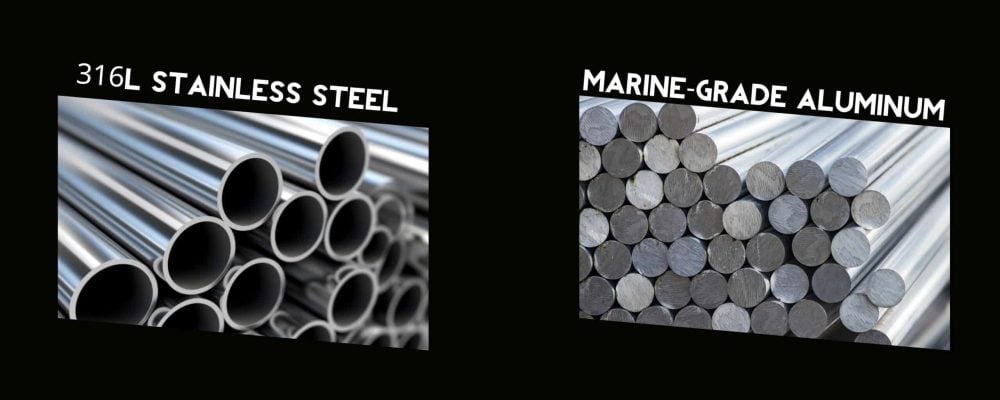
Choosing the right material for an explosion-proof camera housing is critical to ensure safety, durability, and long-term performance in demanding industrial environments. Two materials dominate the field—316L Stainless Steel and Marine-Grade Aluminum—each offering unique advantages depending on the application. Let’s take a closer look.
316L Stainless Steel: The Ultimate in Durability
For unbeatable protection against the harshest elements, 316L stainless steel is the gold standard.
- Superior Corrosion Resistance: Its added molybdenum content makes it exceptionally resistant to pitting and corrosion, especially in salty, humid, or chemically aggressive atmospheres.
Extreme Temperature Stability: It retains its strength and integrity across both high and low temperatures.
Non-Magnetic: Ideal for applications where magnetic interference is a concern.

Best For: Corrosive or high-risk locations such as offshore platforms, chemical plants, and industrial areas exposed to strong cleaning agents.
Marine-Grade Aluminum: Lightweight and Cost-Effective
Marine-grade aluminum alloys, such as 5083 or 6061, offer an excellent balance of performance and value.
Lightweight and Easy to Handle: Its lower weight simplifies installation, making it ideal for mobile applications or complex mounting scenarios.
Cost-Effective: A more budget-friendly option, especially for large-scale projects.
Good Corrosion Resistance: Naturally forms a protective oxide layer, which can be further enhanced with anodizing or coating.
Best For: Marine or port facilities with a regular maintenance schedule, low-corrosion industrial settings, or any installation where weight and cost-efficiency are key priorities.
Comparison Summary
| Feature | 316L Stainless Steel | Marine-Grade Aluminum |
| Corrosion Resistance | Superior | Good (improves with coating) |
| Weight | Heavy | Lightweight |
| Cost | High | Moderate to Low |
| Chemical Resistance | Excellent | Limited |
| Strength | High | Moderate |
| Maintenance | Minimal | Requires coating upkeep |
Understanding Housing Ratings: IP, IK, and NEMA Explained
When selecting an explosion-proof camera housing, material is only part of the story. The true measure of an enclosure’s durability comes from internationally recognized ratings that certify its ability to withstand dust, water, physical impacts, and corrosion. Understanding these ratings is crucial for ensuring long-term reliability in hazardous environments.

Sealed Against the Elements: IP (Ingress Protection) Ratings
The IP rating is a global standard that classifies an enclosure’s protection against solids (like dust) and liquids (like water).
How it Works: The IP rating consists of two digits. The first (0-6) rates protection against solids, and the second (0-8) rates protection against liquids. Higher numbers mean better protection.
What it Means in Practice: Our housings, such as those rated IP67, are certified to be completely dust-tight and can withstand temporary immersion in up to 1 meter of water. This is essential for offshore, wash-down, and heavy-weather environments.
Built to Endure: IK (Impact Protection) Ratings
The IK rating measures an enclosure’s resistance to mechanical impacts, a critical factor in busy industrial settings.
How it Works: The scale runs from IK00 (no protection) to IK10 (the highest level of protection).
What it Means in Practice: A rating of IK10 signifies the enclosure can withstand a 20-joule impact—equivalent to a 5 kg (11 lbs) object striking the surface. This guarantees protection against both accidental impacts and deliberate vandalism.
The North American Standard: NEMA Ratings
NEMA (National Electrical Manufacturers Association) ratings are the primary standard in the United States. While similar to IP ratings, certain NEMA types add a crucial layer of testing.
The NEMA 4X Advantage: A NEMA 4X rating not only signifies robust protection against dust and water (comparable to IP66/IP67) but also provides an explicit guarantee of corrosion resistance. This is a critical advantage for our customers operating in coastal, marine, and chemical-rich environments.
Explore Our Certified Housing Solutions
Now that you understand the critical role of materials and ratings, the next step is to find the perfect enclosure for your specific application. Our explosion-proof housings are engineered to deliver uncompromising safety and are available in both Marine-Grade Aluminum and 316L Stainless Steel.
Our Marine-Grade Aluminum Housings
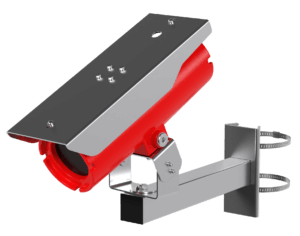
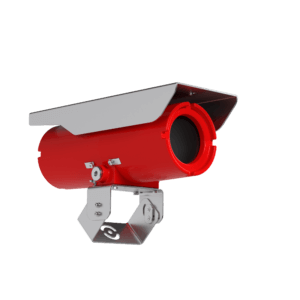
Ideal for versatile industrial monitoring where a balance of performance and cost-efficiency is key. The corrosion protection of aluminum is significantly enhanced by a coating, hence why all aluminum cameras from Spectrum are coated with a unique red layer of protection.
Our 316L Stainless Steel Housings
The ultimate choice for offshore, marine, and chemically aggressive environments where maximum corrosion resistance is non-negotiable.

Need Help with a Custom Specification?
Choosing the right housing is a critical safety decision. If you have questions about certifications, materials, or the specific requirements of your project, our engineering team is ready to help.


